
Television
The Cleanup Brothers: Jude Law and Jason Bateman in Black Rabbit
Jason Bateman and Jude Law play two brothers bound not by love, but by damage. Black Rabbit doesn’t unfold, it barrels ahead, leaving emotional wreckage in its wake. You won’t find much redemption here. But you might find something harder to shake.
© Netflix
Roy Batty
11 november 2025
Bateman is Vince, the older brother. A man with years of bad decisions behind him and more still to make. Law plays Jake, the younger sibling caught in the gravitational pull of Vince’s endless catastrophes. What defines them isn’t affection, it’s repetition. Vince creates chaos. Jake cleans it up. Again and again.
It’s a brutal dance. Jake is visibly eroded, sick with loyalty, always stepping in just before something breaks too far. There’s a kind of tragic muscle memory in the way he helps—no hesitation, no visible calculation. Just action, as if he’s hardwired to save a man who refuses to stop sinking. At a certain point, you stop asking why. You just watch the cycle unfold.

The show moves quickly. Often too quickly. Emotional revelations, violent turns, new crises—they all stack up fast. Sometimes too fast to feel earned. I found myself rewatching scenes, not to admire nuance, but to make sure I hadn’t missed something crucial. Black Rabbit doesn’t luxuriate in pain; it speeds through it, trailing unresolved tension behind.
And yet, the performances pull you in. Law plays Jake with quiet fury and exhaustion. His eyes always scanning, waiting for the next shoe to drop. Bateman’s Vince is maddening, all charisma and self-sabotage. He plays him as a man who knows exactly what he’s doing and he hates himself for it, just not enough to stop. Together, they spark something that feels dangerously real.
Their dynamic reminded me of Mean Streets Scorsese’s 1973 character study of men tied by obligation, guilt, and city heat. De Niro’s Johnny Boy burned bridges while Keitel’s Charlie tried to carry the weight. Vince and Jake echo that rhythm. One loud, one quiet. One reckless, one resigned. But both equally lost.

New York here is more liminal space than city, dim corners, shuttered clubs, apartments that look like they’ve been abandoned mid-life. It’s not a backdrop, it’s a pressure system. The show is thick with atmosphere. No flash, just flickering signs and long silences. A place where no one is quite clean and nothing is ever truly over.
There are flaws. Supporting characters drift in and out, some feeling like archetypes more than people. A few narrative leaps strain belief. And after a while, the sheer number of emotional implosions starts to dull their impact. But even when the story stumbles, the performances keep it grounded.
Because this isn’t really about plot. It’s about damage. About what happens when one person keeps falling and another keeps trying to catch him. About the thin line between loyalty and ruin. It’s a hard thing to watch and that’s what makes it worth watching.
Yes, especially if you value performance over plot. It’s flawed, messy, and sometimes too quick for its own good. But Law and Bateman make it believable, and often quietly devastating.
The latest

Icefall: Throwback Thrills Without the Chills

Bright Room, Big Picture: Living with the Hisense L9Q

The Cleanup Brothers: Jude Law and Jason Bateman in Black Rabbit

The Girlfriend: (Unhealthy) Love, Obsession, and Other Games

From VHS to IMAX: Classics Are 2025’s Hottest ‘New’ Releases

Walking Through Smoke: Taron Egerton's Balancing Act

Alien Earth: Memory, Machines, and the Space Between
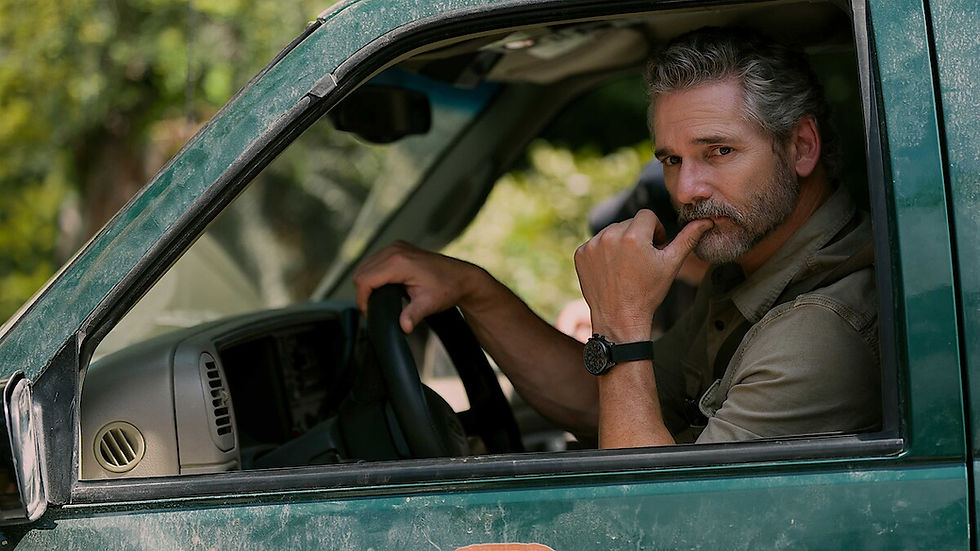
Netflix’s Untamed: A Beautiful, yet Familiar, Ride with Eric Bana at the Helm


